Beyond Emergency Response: The Logistics Behind Long-Term Infrastructure Projects
A major infrastructure project can have crews, equipment, and schedules ready yet still struggle to get started.
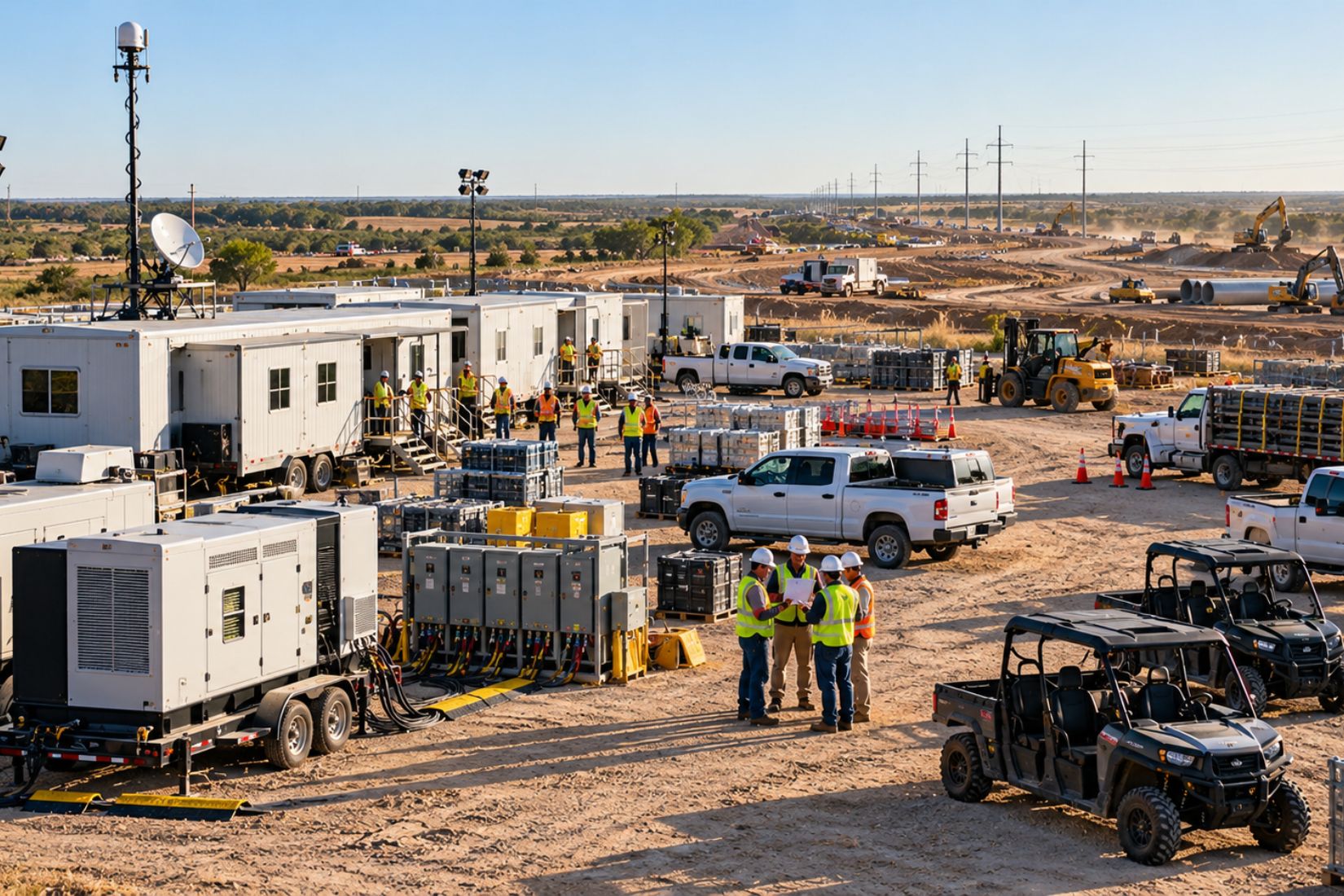
The missing piece is often the site itself. Workers need dependable housing and sanitation. Supervisors need functional offices. Equipment needs power. Crews need safe lighting and reliable transportation. On remote or newly established sites, none of these services can be taken for granted.
For projects expected to run for months or years, site infrastructure is not a temporary convenience. It is part of the operating plan.
A Site Must Be Operational Before Work Can Progress
Project mobilization involves more than delivering materials and bringing people on site. Support systems must be established in a workable sequence.
A housing area without adequate sanitation is not ready for occupancy. An office without dependable power cannot support daily coordination. Transportation arrangements must reflect shift schedules, site access, and distances between work areas.
If these needs are addressed separately or too late, projects may face avoidable delays before productive work is underway.
Small Support Gaps Can Become Project Disruptions
On long-duration projects, modest interruptions add up. An unreliable generator can affect offices and essential services. Inadequate lighting can restrict safe work windows. Limited hygiene facilities can create workforce challenges. Poor transportation planning can leave crews waiting between shifts.
These issues may be unrelated to core technical work, yet still influence productivity, scheduling, and operating costs.
The longer the site remains active, the more important dependable support becomes.
Building the Right Infrastructure Mix
There is no single configuration for every site. A utility project, an industrial expansion, and a government field installation may have different personnel counts, operating hours, and access constraints.
Effective infrastructure site services should align several essential functions:
- Workforce housing and sanitation for daily living
- Offices and command spaces for site management
- Primary and backup power for essential operations
- Site lighting to support safe working conditions
- Transportation and fleet support for personnel and materials
These systems must be sized to the workforce, maintained throughout the project, and adjusted as requirements evolve.
The Advantage of Integrated Site Support
When site services are managed independently, project leaders may spend significant time coordinating deliveries, maintenance, service changes, and responsibility for problems.
An integrated provider can simplify those interactions. Rather than managing each support function as a separate workstream, site leadership gains clearer accountability and a more coordinated approach to changing needs.
For projects lasting several months, consistency can matter as much as initial mobilization speed.
A Partner for the Full Project Timeline
Echo1 Emergency Logistics extends its field-support expertise beyond disaster response through Infrastructure Site Services for long-term projects. Its solutions support sites with 50 to 250+ personnel and operations lasting from three months to over two years.
With asset-backed execution and integrated housing, sanitation, power, lighting, offices, and transportation, Echo1 helps project leaders establish dependable working environments and maintain them as operations evolve. Planning a remote or long-duration project? Explore Echo1's Infrastructure Site Services before mobilization, so your site is ready to support the work from day one.