Beyond the Power Outage: The Logistics Behind Large-Scale Utility Restoration
After a major storm, the public sees utility crews clearing debris, repairing power lines, and restoring electricity. What is less visible is the logistics operation supporting their work.
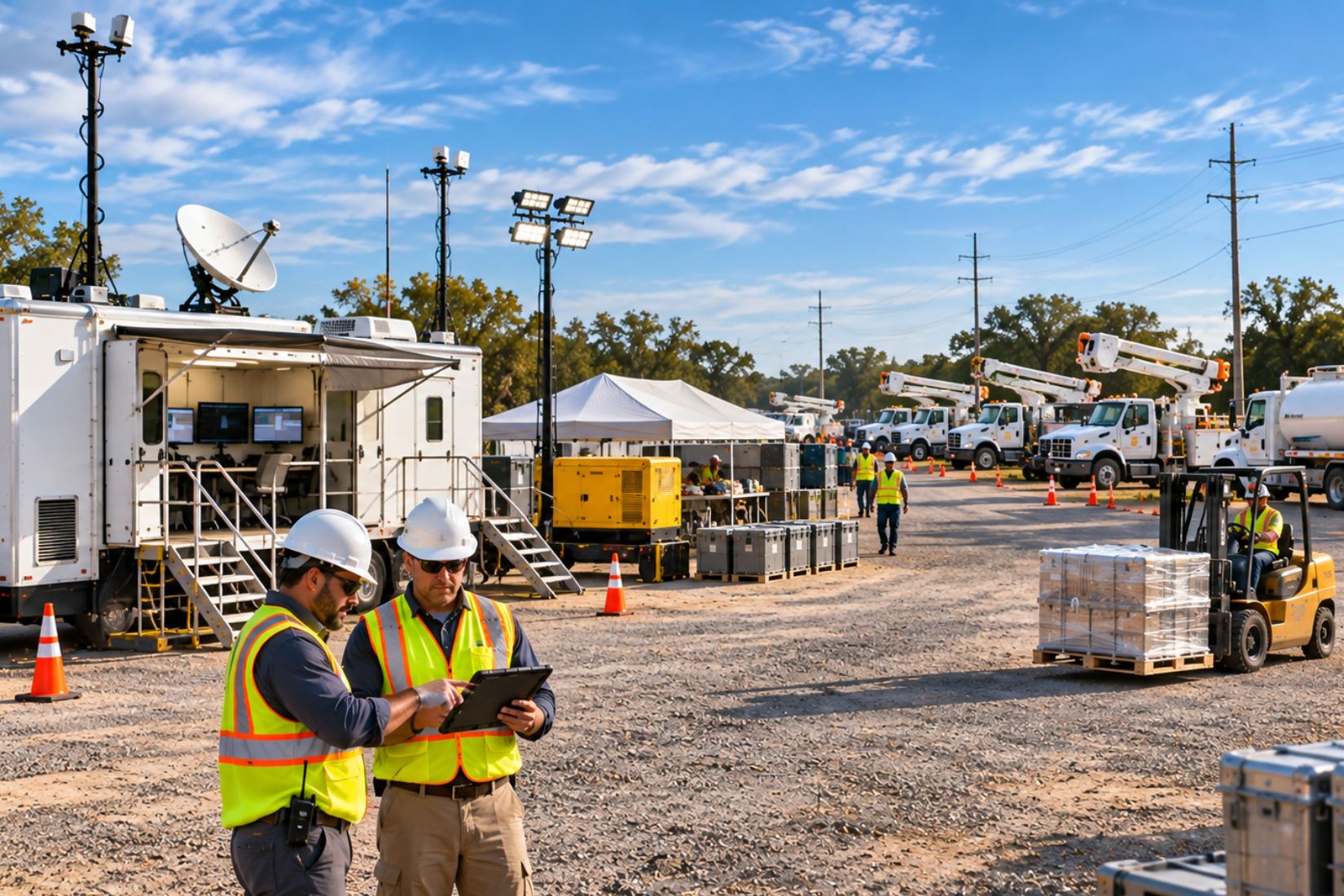
Large-scale utility restoration can bring hundreds or thousands of workers, vehicles, and specialized equipment into affected regions. These crews need more than assignments and tools. They need organized staging, dependable transportation, fuel, and facilities that support safe, sustained operations.
For utilities and response agencies, logistics is an essential part of keeping restoration moving.
The Challenge Behind Crew Mobilization
Utility companies often activate additional crews and mutual assistance partners when damage exceeds local capacity. However, bringing more personnel into an affected region creates immediate support requirements.
Vehicles need parking and refueling. Workers need meals, sanitation, and rest between shifts. Materials require receiving and distribution areas. Supervisors need functional spaces to coordinate assignments and personnel movement.
After severe weather, local hotels, fuel stations, and other essential services may already be strained or unavailable.
Without dedicated logistics support, these constraints can affect restoration operations before crews reach their assigned work areas.
When Support Gaps Affect Restoration
Even highly skilled restoration teams can lose productive time when essential support systems are unreliable.
Long travel distances between assignments and rest locations complicate crew rotations. Fuel shortages can delay vehicle movement. Inadequate staging facilities can slow access to materials and equipment.
These are not electrical repair challenges. They are logistical constraints that influence how efficiently restoration personnel can perform their work.
As operations expand, maintaining dependable support becomes increasingly important.
The objective is not simply accommodating incoming crews. It is establishing an operational environment that allows restoration work to continue efficiently and safely.
What Effective Utility Restoration Logistics Requires
Large-scale utility restoration depends on coordinated support across several essential functions:
- Staging and site infrastructure: Organized areas for personnel, vehicles, equipment, and supplies.
- Transportation and fleet support: Reliable movement between staging locations and assigned work areas.
- Fuel and temporary power: Support for vehicles, equipment, and essential site operations.
- Workforce facilities: Housing, sanitation, meals, and services supporting extended deployments.
- Communications and coordination: Connectivity and operational support for field teams and site management.
These functions must operate together to support changing restoration demands.
Supporting the Crews Who Restore Power
Utility companies and their specialized crews lead the technical work of restoring electrical service. Effective logistics partners help remove operational constraints so those teams can focus on their mission.
At Echo1 Emergency Logistics, integrated capabilities include mobile fueling, temporary power, material handling, transportation, mobile command support, and deployable site infrastructure. Together, these services provide a flexible support framework for complex utility restoration operations.
Preparing for your next major restoration mission?
Explore how Echo1 Emergency Logistics can support the infrastructure, mobility, and field operations behind the crews bringing communities back online.