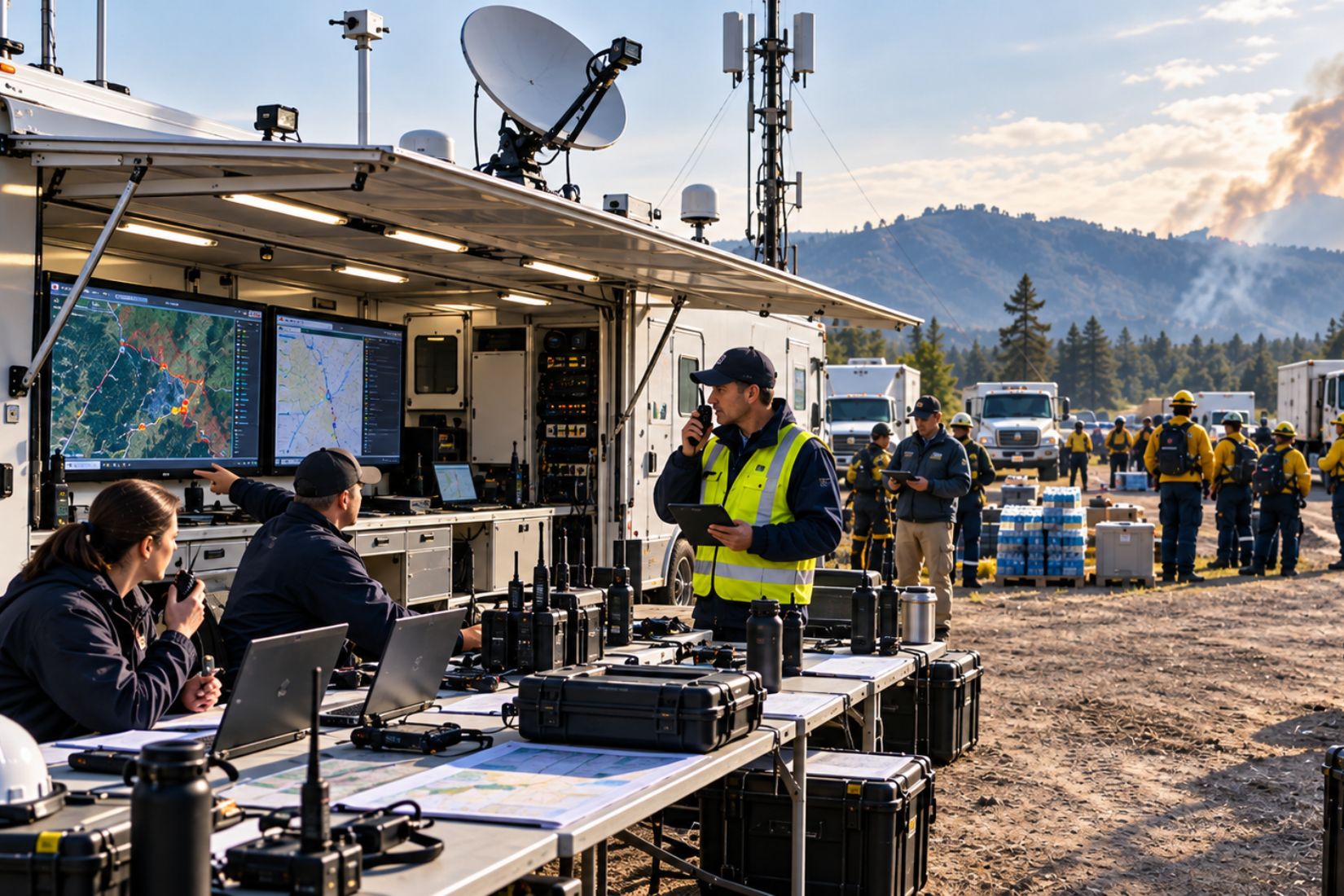
Connected Operations: Why Communications Continuity Is Critical to Emergency Logistics
Emergency logistics depends on movement, infrastructure, and resources. But none of those systems function effectively without reliable communication.
During large-scale disasters, information moves as quickly as conditions change. Command teams need updates from the field. Transportation teams need routing guidance. Supply teams need demand signals. Field personnel need instructions, status updates, and confirmation that support is moving.
When communications are disrupted, logistics becomes slower, less visible, and more reactive.
Communication Is the Connective Layer
Emergency logistics is not only about deploying assets. It is about coordinating people, equipment, infrastructure, and support systems across changing environments.
That coordination depends on communication.
Teams must understand where resources are located, which routes are available, where personnel need support, and how priorities are shifting. Without consistent information flow, even well-resourced operations can lose momentum.
Communication is the connective layer that turns logistics capacity into coordinated action.
When Communication Gaps Create Operational Friction
Disasters often place pressure on traditional communication systems.
Power outages, damaged infrastructure, overloaded networks, remote operating areas, and rapidly expanding missions can all reduce communication reliability. When that happens, field teams and command centers may begin working from incomplete or delayed information.
The effects can compound quickly.
Requests may be duplicated. Resources may be misallocated. Transportation may be delayed. Leadership may lose visibility into what is happening across the operation.
The issue is not always a lack of resources. Often, it is a lack of connected information.
Communications Continuity Supports Decision Making
Reliable communication allows agencies to make decisions with greater confidence.
When command teams receive timely updates, they can adjust priorities, redirect resources, and maintain operational tempo. When field teams remain connected, they can report needs, confirm movement, and coordinate support more effectively.
Communications continuity also strengthens accountability.
Personnel, vehicles, supplies, and infrastructure all move through multiple phases of response. Keeping those movements connected helps reduce confusion and supports a clearer operational picture.
Logistics Must Include Communication Support
Emergency logistics should include communication planning as a core function, not an afterthought.
This may include:
- Satellite communications for disrupted environments
- Mobile command and coordination support
- Field connectivity for deployed teams
- Communication pathways between logistics, operations, and command
- Backup systems when primary networks are unavailable
When communication support is integrated into logistics planning, operations become more resilient.
Keeping Operations Connected
In emergency response, disconnected operations create delays.
Connected operations create control.
At Echo1 Emergency Logistics, communications continuity is built into the broader logistics model. By integrating mobile communications, field coordination, transportation, infrastructure, housing, power, and sustainment support, Echo1 helps agencies maintain alignment when normal systems are strained or unavailable.
Because in complex response environments, logistics does not just need to move. It needs to stay connected.