From Prevention to Response: Why Fire Preparedness Requires Logistics Readiness
Fire Prevention Week brings important attention to reducing fire risk before incidents occur.
Prevention matters. Public education, safer practices, and risk awareness all help reduce the likelihood of fire-related emergencies. But for emergency managers and response agencies, preparedness cannot stop at prevention.
When fire risk escalates into an operational incident, logistics readiness determines how effectively response teams can move, stage, sustain, and support the mission.
Prevention Reduces Risk. Logistics Supports Response.
Fire prevention focuses on avoiding incidents before they happen.
Emergency logistics focuses on what happens when prevention is no longer enough.
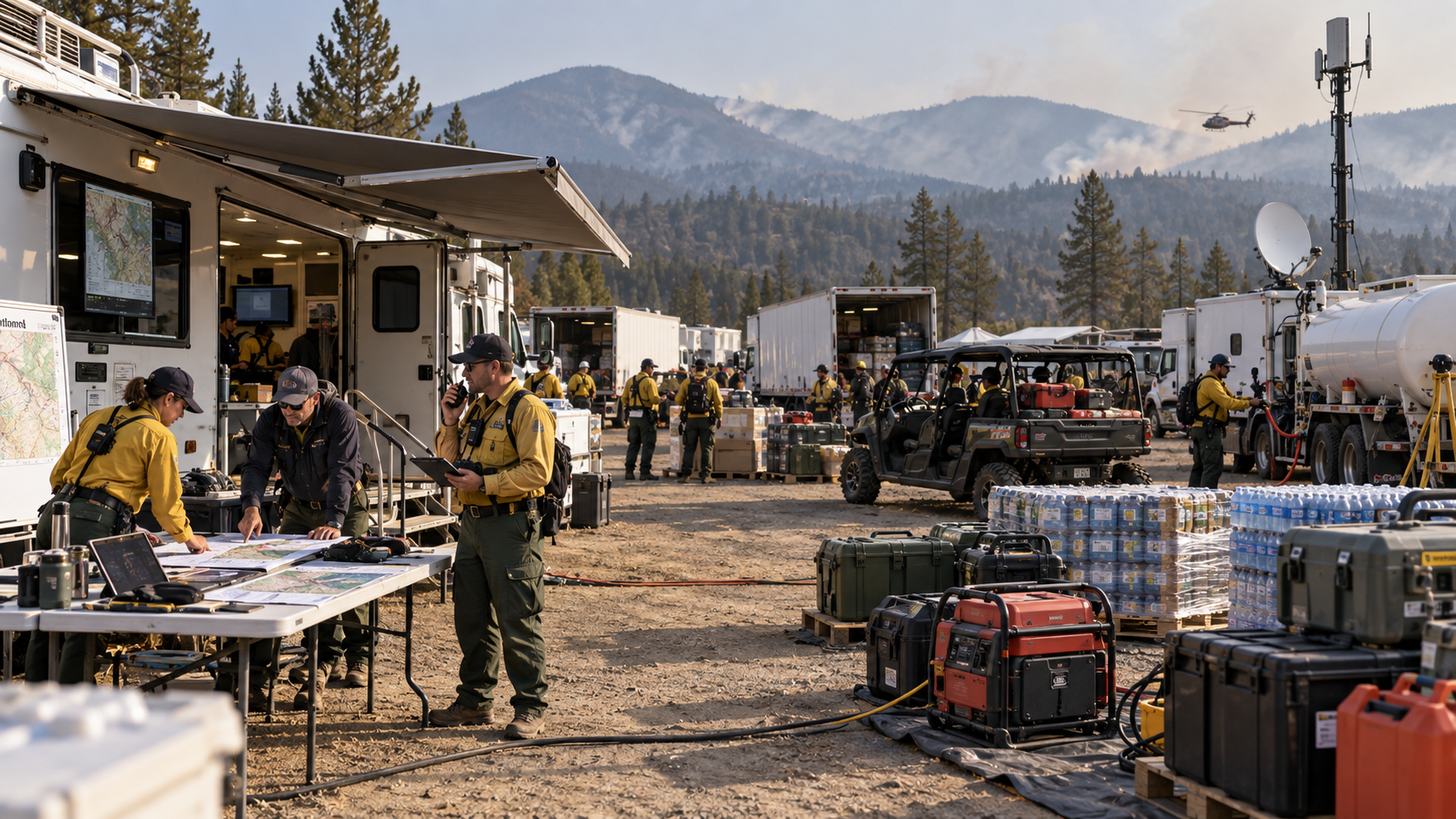
Wildfires, structural fires, utility-related incidents, and large-scale fire emergencies can quickly create complex operational demands. Personnel may need to be deployed across multiple areas. Temporary command sites may need to be established. Power, communications, transportation, fuel, housing, and field support may all become mission-critical.
The faster these systems are aligned, the more effectively agencies can support response operations.
Fire Incidents Create Infrastructure Pressure
Fire-related emergencies often affect the systems response teams depend on.
Roadways may become restricted. Power may be interrupted. Communications may be strained. Evacuation routes may need to be supported. Field teams may require temporary housing, sanitation, meals, and rest areas during prolonged operations.
These are not secondary needs.
They are the logistical foundation that allows response personnel to remain operational when conditions are unstable.
Without strong logistics support, even capable teams can face unnecessary delays, fatigue, and coordination strain.
Preparedness Must Include Field Support
Fire preparedness should account for more than equipment and response plans.
It should include the infrastructure required to support people, movement, and operations in the field.
This includes:
- Temporary base support and housing
- Transportation and personnel movement
- Power, fuel, and communications support
- Supply distribution and sustainment
- Field coordination and operational continuity
When these systems are planned before an incident, agencies are better positioned to maintain tempo once response begins.
Logistics Readiness Strengthens Fire Response
Fire-related operations can change quickly.
An incident may expand. Additional crews may arrive. Staging areas may shift. Support requirements may grow as operations extend beyond the first operational period.
Logistics readiness helps agencies adapt without losing control.
Integrated support allows transportation, infrastructure, communications, and sustainment to work together rather than as separate functions. This reduces friction and helps leadership maintain focus on mission priorities.
Built for the Transition from Prevention to Response
Fire Prevention Week is a reminder that readiness begins before an incident.
But true preparedness is proven when plans become operations.
At Echo1 Emergency Logistics, support is built around the full operational environment. By integrating mobility, temporary infrastructure, communications, power, fuel, housing, and sustainment, Echo1 helps agencies remain ready when fire risk turns into response demand.
Because when prevention shifts to response, logistics must already be prepared to move.