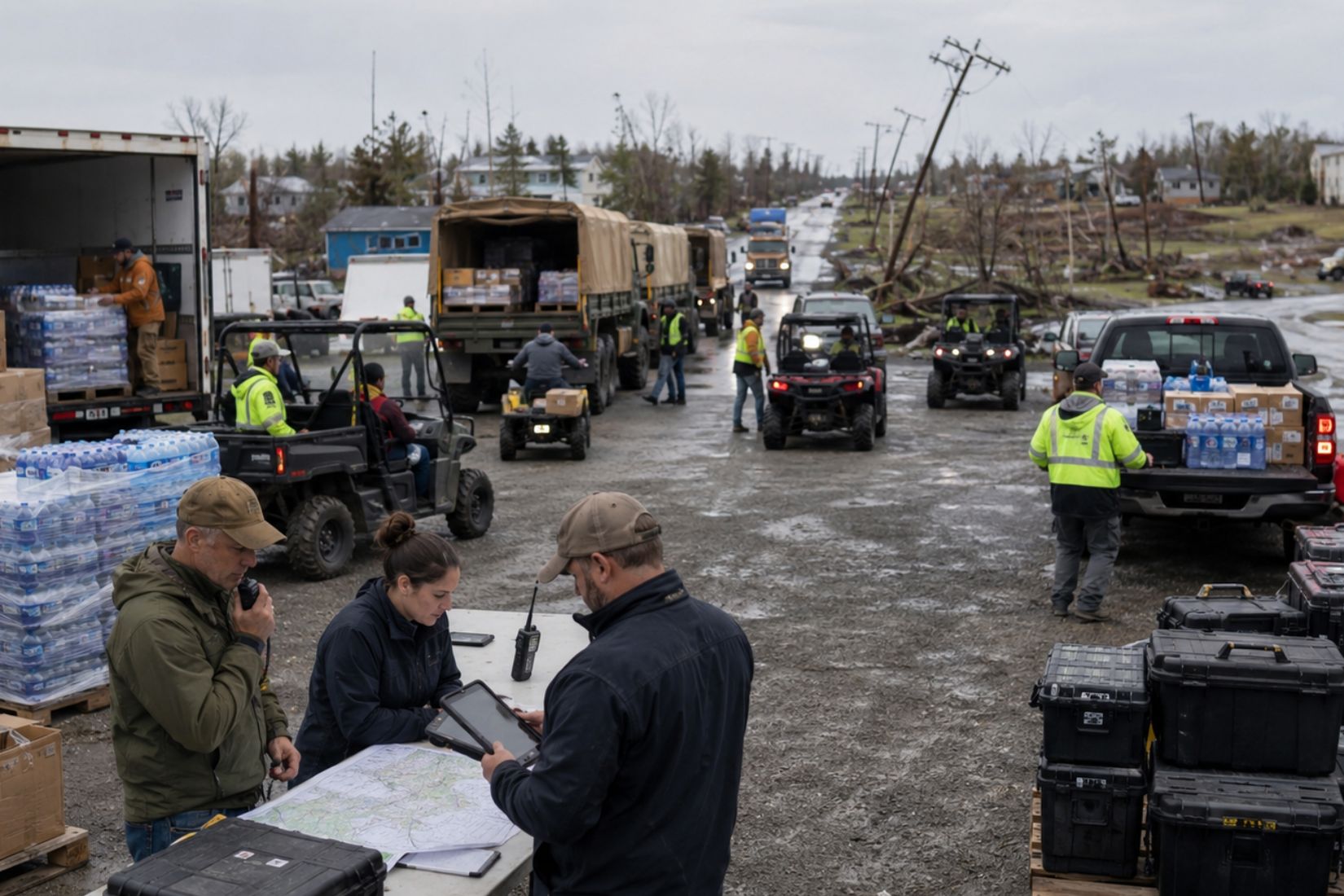
From Staging to Point of Need: Why Field Distribution Defines Disaster Response Outcomes
In disaster response, getting resources to a staging area is only part of the mission.
Supplies, personnel, equipment, and support systems may be mobilized and available, but they do not create impact until they reach the exact locations where they are needed. The final movement from staging to point of need is where emergency logistics becomes most operationally significant.
Field distribution determines whether resources become useful or remain delayed in the system.
Staging Is Not the Finish Line
Staging areas are essential to large-scale response. They provide structure, organization, and a controlled point for receiving and coordinating resources.
However, staging is not the final objective.
Once resources arrive, they must be sequenced, assigned, transported, and integrated into field operations. This requires more than availability. It requires understanding site priorities, access conditions, personnel needs, and mission timing.
A resource that is staged but not delivered to the right location at the right moment cannot fully support the response.
Why Field Distribution Becomes Complex
Disaster environments create competing demands across multiple operational areas.
One site may need personnel support. Another may require supplies, temporary infrastructure, or transportation coordination. Field teams may need rotating support as conditions evolve. At the same time, priorities can shift as new assessments come in.
This creates a distribution challenge.
The question is not simply what resources are available. The question is where they should go first, how they should move, and how their delivery supports the broader mission.
Without disciplined field distribution, response efforts can lose efficiency even when resources are technically in place.
Sequencing Matters
Effective logistics depends on proper sequencing.
Some resources cannot be useful until others arrive first. Personnel may require housing before extended operations can begin. Equipment may require site preparation before deployment. Supplies may need transportation support before they can reach field teams.
When sequencing is misaligned, delays multiply.
Strong field distribution ensures that resources move in an order that supports operational readiness, not just delivery speed.
Distribution Supports Mission Focus
Field distribution reduces the burden on command teams.
When logistics partners understand how to move resources beyond staging and into operational use, agencies gain clearer execution pathways. Field teams receive support faster. Sites become functional sooner. Leadership can focus on mission priorities instead of managing resource movement step by step.
This is where logistics shifts from transportation to mission support.
Moving Resources Where They Matter Most
Large-scale response depends on more than mobilization. It depends on the ability to move resources from staging into the field with precision, timing, and operational awareness.
At Echo1 Emergency Logistics, support is structured to extend beyond initial deployment. By integrating transportation, field infrastructure, personnel support, communications, and sustainment into a unified logistics model, Echo1 helps agencies move critical resources where they matter most.
Because in emergency response, resources only create impact when they reach the point of need.